By: Retave’s Technology Desk Editor
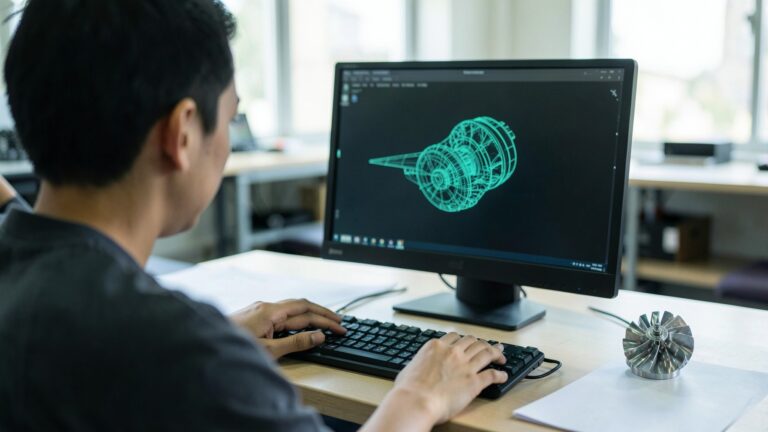
A student in Johor runs a lab experiment on a laptop. In Sarawak, a university college is preparing to provide its students with aircraft design tools on-screen. Both scenes come from two technologies finding their way into engineering education: virtual labs and digital twins.
The two terms often travel together and sometimes get mixed up, though each describes something different.
In plain words
- A virtual lab is a software version of a laboratory. Students carry out experiments through simulations, often in a web browser and sometimes in virtual reality (VR). They can practise procedures and see results before, or alongside, hands-on work in a physical lab.
- A digital twin is a virtual model of a real object or system, such as a machine, a production line, or a building, that is fed with data from its physical counterpart. Engineers use it to watch how the real thing is performing and to test changes on screen first. Some companies, including Dassault Systèmes, call this a “virtual twin.”
The difference comes down to the link with reality. A virtual lab simulates an experiment. A digital twin mirrors a specific, real system and updates as that system changes.
A virtual lab in Johor
Universiti Teknologi Malaysia (UTM) has run its UTM Virtual Lab since August 2023. It gives students remote access to lab experiences and experiments through simulations and immersive scenarios. About 3,000 people attended the launch, which was officiated by UTM’s vice-chancellor at the time, Professor Datuk Ir Ts Dr Ahmad Fauzi Ismail.
The lab was developed by UTM’s Centre for Advancement in Digital and Flexible Learning (CDEX) with the university’s Media and Game Innovation Centre of Excellence (MaGICX). UTM describes the move as making it “the pioneer among public universities in Malaysia” in introducing web-based VR labs.
The virtual lab is designed to supplement classroom teaching and be a hub for research and knowledge sharing across disciplines.
Other universities have come to look. After an Open University Malaysia (OUM) team toured the lab in September 2024, OUM lecturer Ts Tajuzzaman Hassanor wrote that engineering students can explore 3D models while science students run virtual experiments, “offering practical learning in a risk-free environment.”
A virtual twin showcase in Sarawak
On 29 July 2026, i-CATS University College in Sarawak signed a memorandum of understanding (MoU) with the French engineering software company Dassault Systèmes. The Premier of Sarawak, Datuk Patinggi Tan Sri Abang Johari Tun Openg, witnessed the signing.
The partnership will set up a Digital Aerospace Showcase at i-CATS, which Dassault Systèmes bills as Southeast Asia’s first digital showcase of its kind, on its 3DEXPERIENCE platform. It is planned as a place where industry, universities, government, and the public can explore aerospace design, simulation, and virtual twin technologies. Students and researchers will gain access to the platform to work on aircraft design, avionics, aircraft maintenance, and advanced manufacturing.
“This partnership will support industry-relevant learning, multidisciplinary research and innovation,” said i-CATS vice-chancellor Professor Emeritus Datuk Ts Dr Mohamad Kadim Suaidi.
The smart-factory link
Malaysia’s New Industrial Master Plan 2030 (NIMP 2030) sets a minimum target of 3,000 smart factories by 2030, as our companion piece, “Becoming technology creators: what NIMP 2030’s ‘Tech Up’ mission means for Malaysia’s campuses”, explains. Virtual models of machines and production lines are part of how a smart factory plans and tests its changes, the same kind of on-screen modelling students now meet at UTM and, soon, at i-CATS.
Sarawak’s first step
Dassault Systèmes describes the i-CATS MoU as a first step, with structured training and capability building to follow, beginning with the Digital Aerospace Showcase. For students at i-CATS, that puts the aerospace industry’s design tools within reach on their own campus.
Further Reading
- AI in the Classroom, AI in the Career Office: Malaysia’s Plan for Personalised Tertiary Learning
- Becoming technology creators: what NIMP 2030’s ‘Tech Up’ mission means for Malaysia’s campuses
- Training the Trainers: How Malaysia Plans to Get University Educators AI-Ready
Sources
- Dassault Systèmes. (2026, July 29). i-CATS University College and Dassault Systèmes to advance Sarawak’s aerospace and digital engineering ambitions [Press release]. https://www.3ds.com/newsroom/press-releases/ap-south/i-cats-university-college-dassault-systemes-advance-sarawaks-aerospace-digital-engineering-ambitions
- Ministry of Investment, Trade and Industry. (n.d.). Mission 2: Tech up for a digitally vibrant nation. New Industrial Master Plan 2030. https://www.nimp2030.gov.my/index.php/pages/view/317
- Open University Malaysia. (2024, October 24). Levelling up STEM education: OUM explores virtual lab technologies. https://oum.edu.my/levelling-up-stem-education-oum-explores-virtual-lab-technologies
- Universiti Teknologi Malaysia. (2024, March 17). MaGICX: Launching the virtual lab. https://research.utm.my/ihumen/magicx-launching-the-virtual-lab/